



Are you ranking on page one of Google but nowhere to be found when someone asks ChatGPT the same question? Have customers told you they “couldn’t find you,” even though your website looks fine and your SEO reports look healthy? Is a competitor showing up when people ask an AI tool for a recommendation while you don’t?
If any of this sounds familiar, you’re not alone. In nearly every client meeting we have at DigiSensy these days, some version of this question comes up: “Why isn’t my business showing up in AI search?” It’s one of the most common frustrations business owners are facing right now, and most of them have never gotten a clear answer.
This blog covers:
- Why ranking well on Google no longer guarantees you’ll be found by AI tools
- What AI search engines actually look for before mentioning a business
- A practical checklist to start improving your visibility in AI search
1. Why Ranking #1 on Google No Longer Guarantees Visibility
For years, the goal was simple: rank higher on Google, get more clicks. That formula still matters, but it’s no longer the whole picture.
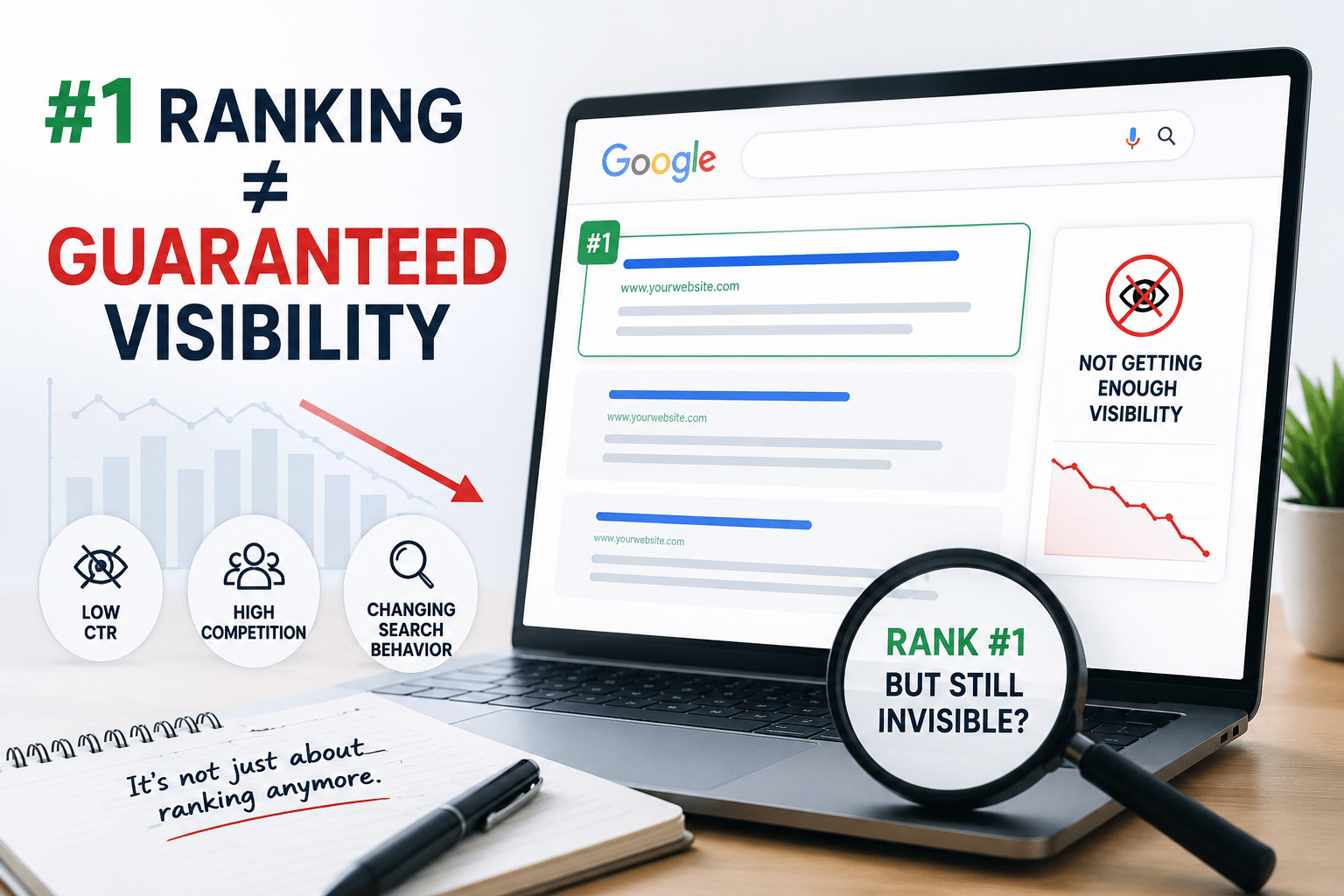
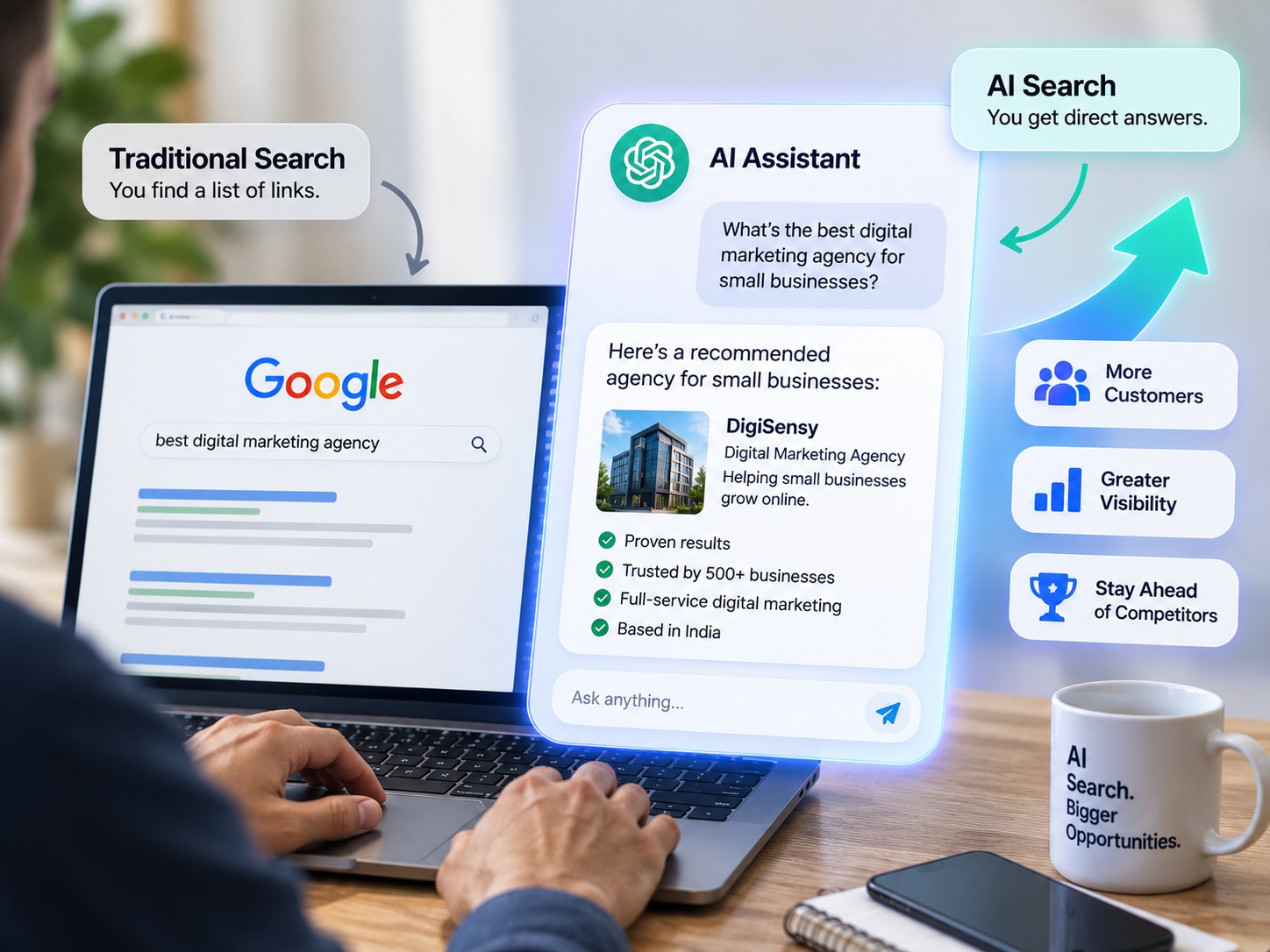
Tools like ChatGPT, Google’s AI Overviews, and Perplexity don’t hand users a list of ten blue links and let them pick one. Instead, they pull information from multiple sources at once and stitch together a single, direct answer. Your site can sit comfortably on page one of Google search results and still be completely absent from that answer.
This is not just a theory a 2026 field experiment found that when an AI summary appears at the top of a search, click-through rates to websites drop by as much as 38%. Even when people do click something inside the AI summary itself, it happens only about 1% of the time.
The reason is simple: these tools aren’t just ranking pages anymore. They’re deciding which sources are clear enough, trustworthy enough, and well-structured enough to actually quote. A high Google ranking gets your foot in the door, but it doesn’t guarantee a seat at the table when an AI tool is putting its answer together.
The takeaway: your SEO strategy needs a second layer now — one built specifically for how AI tools read, evaluate, and select information.
2. What AI Search Engines Actually Look For
So what actually decides whether a business gets picked up by an AI assistant? Based on what we’re seeing across client accounts, a few factors consistently make the difference:
- Clarity over branding language. AI tools want plain, direct answers to what you do, who you serve, and where you’re located. Clever taglines and vague positioning statements don’t translate well if a visitor (human or AI) has to guess what you actually offer, they’ll move on to a competitor who spelled it out.
- Trust signals beyond your own website. Reviews, media mentions, expert quotes, and listings on reputable third-party sites all matter. Two businesses can rank identically on Google, but the one with a wider footprint of outside validation is far more likely to be treated as a credible source.
- Content that answers specific questions. People no longer type two or three keywords into a search bar they ask full, natural questions. AI tools often break a single question into smaller parts and search for each one separately. If your content only targets broad keywords and never addresses the specific questions your customers are actually asking, you’re leaving gaps an AI tool has no reason to fill with your business.
- Fresh, detailed content. A thin page from two years ago rarely beats a competitor’s page that’s recent, thorough, and genuinely useful. AI tools weigh how current and complete your information looks against what else is available.
- A site that’s easy to read and crawl. Even excellent content can go unnoticed if your website is slow, disorganized, or missing basic structure. AI tools need to be able to access and understand your pages just as much as a search engine does.
The takeaway: visibility in AI search isn’t about one trick it’s about consistently giving these tools a reason to trust and quote you over everyone else answering the same question.
Curious where your business currently stands? DigiSensy can run a quick check on how or whether AI tools are referencing you right now.
3. How to Make Your Business “AI-Search Ready”
The good news is that none of this requires throwing out your existing SEO work. It means building on top of it. Here’s where to start:
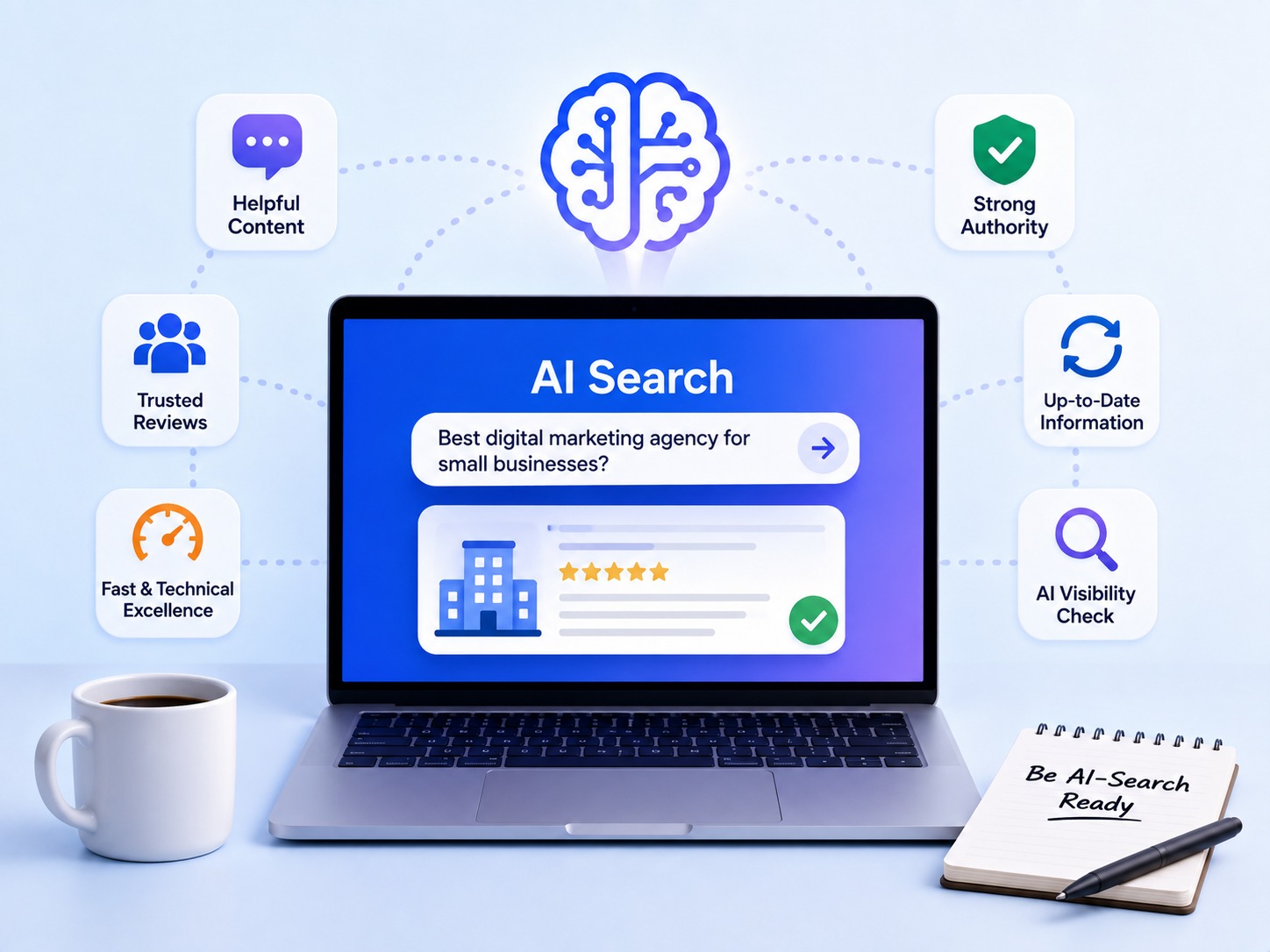
- Write in plain language. Clearly state what you offer, who it’s for, and how it helps skip the jargon and marketing flourishes.
- Build content around real questions. Base your pages on the actual questions customers ask, not just the keywords you want to rank for.
- Strengthen your outside footprint. Actively collect reviews, pursue media mentions, and get listed on relevant third-party directories and platforms.
- Keep key pages current. Revisit your most important pages regularly and update them with accurate, useful information don’t let them go stale.
- Fix the technical basics. Make sure your site loads quickly, is well-organized, and doesn’t bury important content several clicks deep.
- Check what AI tools are already saying. Ask ChatGPT or another AI assistant questions a potential customer might ask, and see if and how your business comes up.
The takeaway: small, consistent changes across these six areas will move the needle far more than chasing a single “AI SEO hack.”
Why This Matters More Than Ever
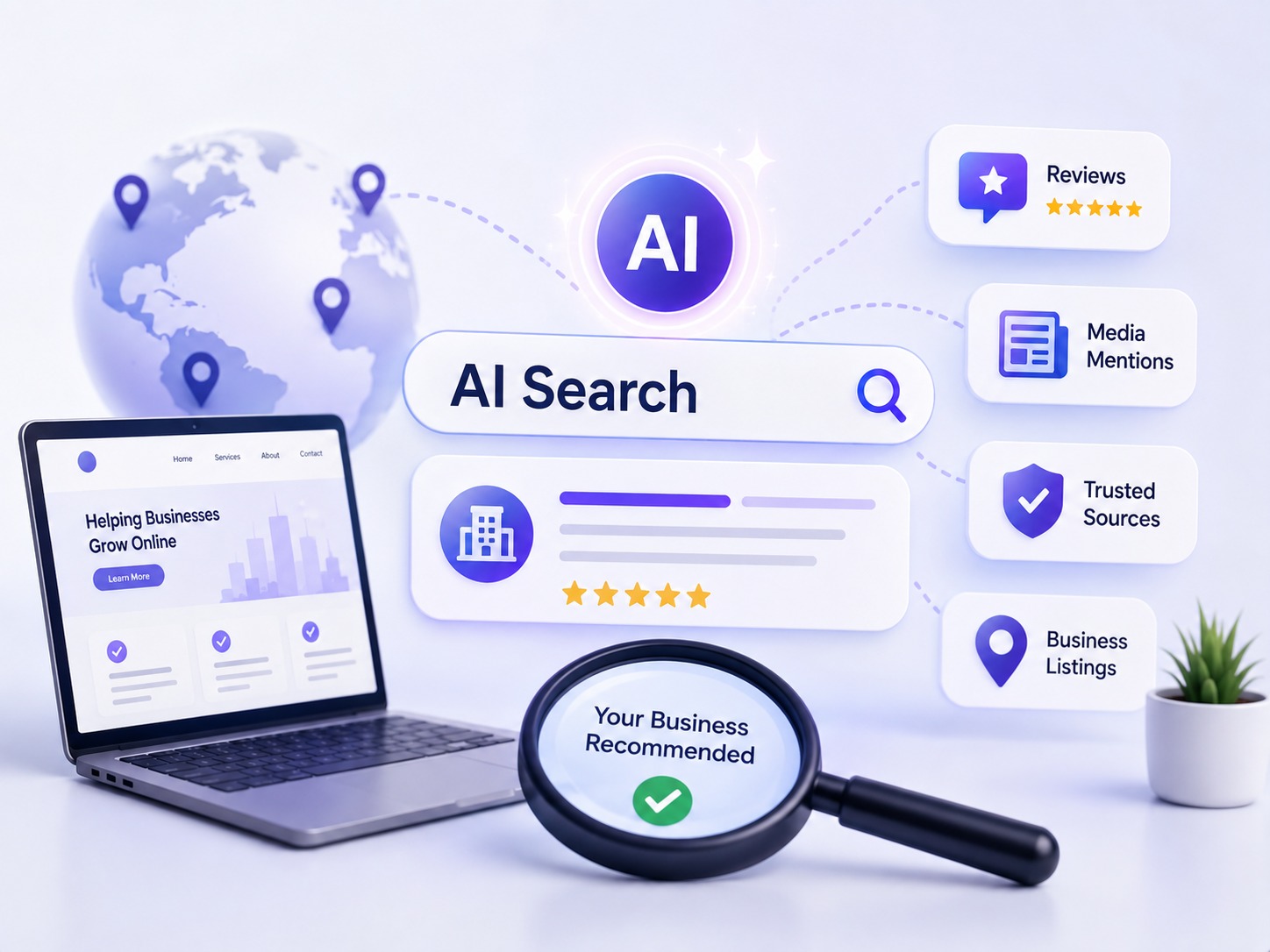
More people are turning to AI assistants as their first stop for recommendations, and that shift isn’t slowing down. A business can have a strong Google ranking and still lose visibility with a growing share of customers who never scroll past an AI-generated answer.
This isn’t a reason to panic it’s a reason to act early, while most competitors are still figuring out what’s changed. Businesses that adapt now will have a real head start over the ones who wait until it becomes obvious.
The Bottom Line
Ranking well on Google used to be the finish line. Now, it’s just one step. The businesses that win going forward will be the ones that show up not only in search results, but in the actual answers customers receive when they ask AI tools for help.
If you’re not sure where your business currently stands in AI search or you want a strategy that works for both traditional search and the AI-driven future DigiSensy can help you figure out exactly where the gaps are and how to close them. Get in touch, and let’s find out where your business stands.